
Introduction
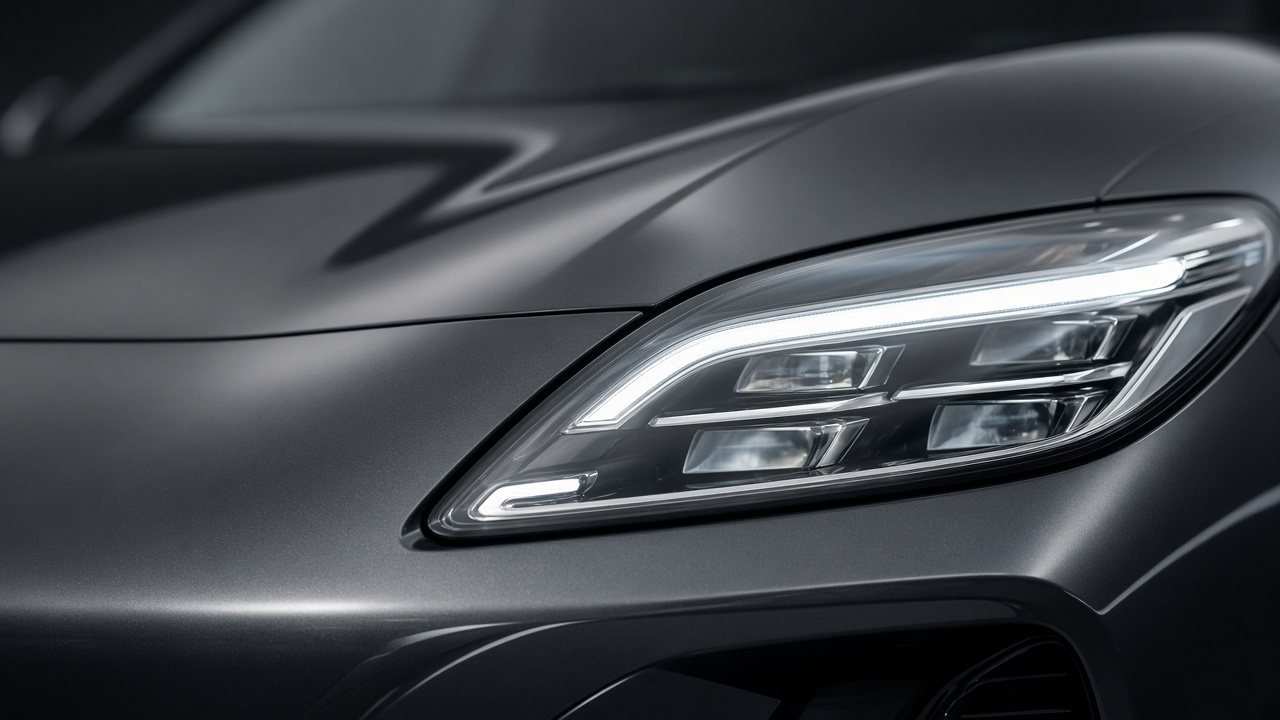
Headlights take a beating. They sit at the very front of the car, they face every stone, bug and grain of sand that comes off the road ahead, and they spend years in direct sunlight. On most modern cars the lens is made of polycarbonate plastic, which is light and strong but much softer than glass. Over time that plastic can pit, scratch and turn cloudy.
Headlight PPF is a clear layer of paint protection film cut to fit the headlight lens. It is one of the smallest areas you can protect on a car, but it is also one of the most exposed. This guide explains what headlight film does, where it helps, what to check before fitting it and how to look after it.
Why Headlights Wear Out
A new headlight lens has a factory hard coat that protects the plastic underneath. Several things wear that coat down:
- Stone chips and road grit. Small stones thrown up by the car in front leave pits and chips, especially at highway speeds.
- Sand and dust. In dry or dusty regions, fine particles sandblast the lens over thousands of kilometres.
- UV exposure. Sunlight slowly breaks down the hard coat. Once it fails, the plastic can turn yellow and hazy.
- Harsh cleaning. Automatic car washes, dry wiping and strong chemicals add fine scratches.
- Bug splatter. Insect residue is acidic and can mark the surface if it is left too long.
Cloudy or pitted headlights are not just a cosmetic problem. A hazy lens can scatter and weaken the beam, which makes night driving less comfortable and less safe. Replacing a modern LED or matrix headlight unit can also be one of the more expensive repairs on a car.
How Headlight PPF Helps
Paint protection film is made from thermoplastic polyurethane (TPU), a flexible and impact-absorbing material. When it is applied over the headlight lens, the film takes the hits instead of the plastic underneath. Here is what that means in practice:
Protection from stone chips
TPU absorbs and spreads the energy of small impacts. Stones that would pit a bare lens usually leave the film marked at worst, and the lens below stays intact. If the film is ever badly damaged, it can be removed and replaced, which is far simpler than replacing a headlight.
Help against haze and yellowing
Quality PPF has a UV-stable top coat. By shielding the factory hard coat from abrasion and direct exposure, the film helps the lens stay clear for longer. To learn why some cheaper films yellow over time, read our guide on why PPF yellows.
Self-healing of fine scratches
Many modern films have a self-healing top coat. Fine swirls from washing can fade with warmth from the sun or warm water. See what self-healing PPF can fix for the limits.
Easier cleaning
A smooth, hydrophobic top coat makes bug splatter and road film easier to wash off, so you scrub the lens less often.
Is Headlight PPF Worth It?
For most cars, yes. It is one of the most worthwhile small areas to protect, and it is often included when you choose a front-end or full-front package. It makes the most sense if:
- You drive a lot on highways or behind trucks.
- You live somewhere dusty, sandy or with gravel roads.
- Your car has expensive LED, laser or adaptive headlight units.
- You plan to keep the car for many years or want to protect resale value.
- Your car is new and the lenses are still in perfect condition.
It matters less if your headlights are already badly yellowed or pitted. Film should go onto a clean, clear lens. If the lens is damaged, it needs to be restored or replaced first, because film will not hide existing damage.
If you are deciding how much of the car to cover, our comparison of full front vs full body PPF explains which areas take the most damage.
Clear Film vs Tinted Headlight Film
Some drivers like the look of smoked or tinted headlight film. Before choosing it, keep two things in mind:
- Legal rules. Many countries, states and regions restrict anything that reduces headlight output or changes its colour. Tinted film can make a car fail an inspection or attract a fine. Clear film is the safe choice in most places, but always check your local road rules.
- Light output. Any tint reduces how much light reaches the road. Clear, high-clarity film is designed to have no noticeable effect on the beam.
For daily driving, we recommend clear, high-gloss film with good optical clarity. Our article on PPF optical clarity and orange peel explains what to look for.
What to Check Before Fitting Headlight PPF
- Lens condition. The lens should be clean and free of haze, cracks and deep pits.
- Film quality. Choose a TPU film with a stable top coat. Low-grade PVC films can yellow, crack and be hard to remove. Our TPU vs TPH vs PVC PPF guide covers the differences.
- Pattern and fit. Headlights have deep curves. A precise pre-cut pattern or careful custom cutting gives clean edges with no lifting.
- Installer skill. Headlights are curved and visible, so stretch marks, bubbles and trapped dust show clearly. Pick a trained installer. Read why professional PPF installation matters.
- Warranty. Ask what the film warranty covers and how to register it. Our guide on how PPF warranties work explains the basics.
To compare the Ultra Nano Shield range and its official specifications, see our product catalogue.
How to Care for Headlight PPF
Headlight film needs the same gentle care as the rest of your PPF:
- Wait for the film to settle before washing. Follow our PPF care for the first 30 days guide.
- Use a pH-neutral car shampoo and a soft microfibre mitt.
- Keep a pressure washer nozzle at a safe distance and never aim it straight at the film edges.
- Remove bug splatter early with a soft cloth and plenty of water.
- Avoid abrasive polishes, headlight restoration kits and strong solvents on the film.
- Do not scrape ice off with hard tools in winter.
Our full guide on how to wash a car with PPF covers the complete routine.
Summary
Headlights are small, exposed and costly to replace. Clear, high-clarity PPF over a healthy lens protects it from chips, grit and abrasion, helps it stay clear for longer and is easy to care for with gentle washing.
Conclusion
Headlights are small, exposed and costly to replace, which makes them one of the best places to start with paint protection film. Explore the Ultra Nano Shield paint protection film range or contact us to find an authorised installer near you.
Explore Ultra Nano Shield Solutions
Talk to us about the right Ultra Nano Shield film for your vehicle, or find an authorised installer near you.