
Introduction
Paint protection film (PPF) is tough, but it lasts longest when it is washed the right way. The good news is that caring for PPF is simple: gentle soap, soft microfibre, sensible pressure and regular cleaning. Most of the damage we see on filmed cars comes from a few avoidable habits, such as harsh chemicals, abrasive polish or a pressure washer held too close to an edge.
This guide covers the routine to follow once your film has settled in. If your film was installed in the last few weeks, start with our guide to PPF care in the first 30 days, because fresh film needs a little more patience.
Why Washing Technique Matters for PPF
PPF is a clear layer of thermoplastic polyurethane (TPU) with a protective top coat. That top coat is what gives the film its gloss, its stain resistance and, on self-healing films, its ability to recover from fine swirls with heat. Good washing keeps the top coat clean and intact. Poor washing can:
- Leave grit on the surface that gets dragged across the film, causing fine scratches.
- Lift film edges if high-pressure water is aimed straight at them.
- Dull or stain the top coat if strong solvents or abrasive products are used.
- Let bird droppings, tree sap and bug splatter sit long enough to mark the film.
Want to know what the film can and cannot recover from? Read what self-healing PPF can fix.
How Often Should You Wash a Car With PPF?
For most daily drivers, a wash every one to two weeks is a good rhythm. Wash more often if:
- You drive on dusty roads or near construction.
- Your area has salted winter roads, sea air or heavy pollen.
- The car is parked under trees or where birds gather.
Regular washing matters more than the perfect product. Dirt that is removed early comes off easily. Dirt that bakes on for weeks needs more scrubbing, and scrubbing is where scratches start.
Step-by-Step: The Safe Way to Wash PPF
1. Wash in the shade, on a cool surface
Hot panels dry soap and water too fast, which leaves spots and streaks. Wash early in the morning, in the evening or in the shade.
2. Rinse first to remove loose dirt
Start with a thorough rinse from the top down. This lifts sand and grit before anything touches the film.
3. Use a pH-neutral car shampoo
Choose a pH-neutral car wash soap with no harsh degreasers. Avoid dish soap and household cleaners. They can strip protection and dry out the top coat over time.
4. Use the two-bucket method
Fill one bucket with soapy water and another with clean rinse water. Load your wash mitt in the soap bucket, wash one panel, then rinse the mitt in the clean bucket before going back for more soap. A grit guard in the bottom of each bucket helps keep dirt away from the mitt.
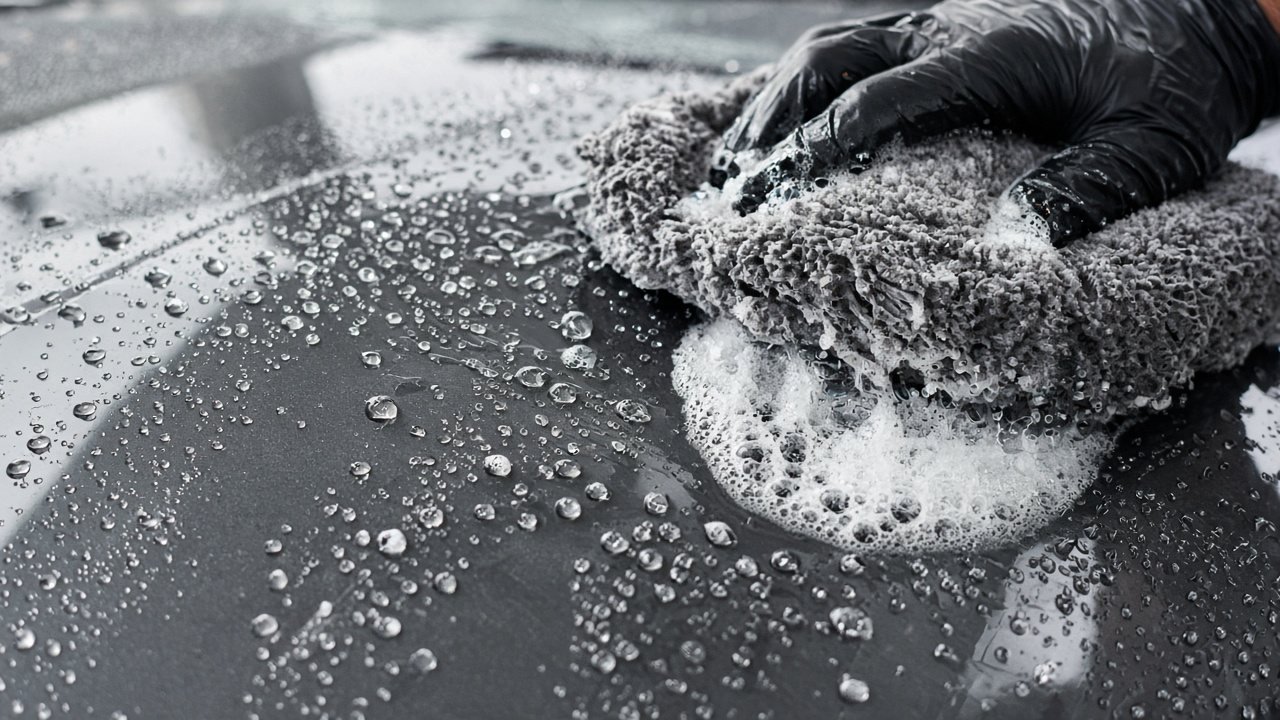
5. Wash with a soft microfibre mitt, top to bottom
Work from the roof down, because the lower panels carry the most grit. Use straight, light passes instead of hard circles. Let the soap do the work.
6. Rinse again, then dry gently
Rinse all soap away, then dry with a clean, plush microfibre drying towel. Pat or glide the towel; don't scrub. An air blower is a great way to clear water from edges, badges and mirrors without touching the film.
Can You Pressure Wash PPF?
Yes, as long as you are careful. A pressure washer is fine for rinsing a filmed car if you follow three simple rules:
- Keep your distance. Hold the nozzle well back from the surface, roughly 30 cm (about 12 inches) or more.
- Use a wide fan tip. Avoid narrow pencil jets, which concentrate force in one spot.
- Never aim at the edges. Spray across film edges, not directly into them. Water forced under an edge is the most common way film starts to lift.
If you use an automatic car wash, touchless washes are the safer choice. Brush washes can leave fine marks on any finish, filmed or not.
Removing Bird Droppings, Bugs and Tree Sap
These are the contaminants most likely to stain PPF if left alone, especially in hot weather.
- Act quickly. Remove them as soon as you can, ideally the same day.
- Soften first. Lay a microfibre towel soaked in warm water or a dedicated bug remover over the spot for a minute or two.
- Lift, don't scrape. Wipe gently once the deposit has softened. Never use a fingernail, blade or abrasive pad.
- Tar and sap. Use a remover that says it is safe for PPF or clear film, and test it on a small hidden area first.
Do's and Don'ts of PPF Care
The short version, as pairs of habits:
Soap
Do use pH-neutral car shampoo. Don't use dish soap, kitchen cleaners or strong degreasers.
Touching the film
Do wash with a soft microfibre mitt. Don't use sponges, brushes or rough cloths.
Before the wash
Do rinse thoroughly first. Don't wipe a dry, dusty car with a towel.
Pressure washer
Do keep it back and use a wide tip. Don't blast edges or seams at close range.
Contaminants
Do remove bird droppings and bugs quickly. Don't leave them to bake in the sun.
Products
Do use products labelled safe for PPF and ask your installer before coatings. Don't use abrasive polish, compound or untested solvent-heavy products.
Should You Wax or Coat PPF?
You don't need to wax PPF, and some traditional waxes can leave a residue along film edges. Many owners prefer a PPF-safe spray sealant or a ceramic coating made for film. A coating adds water beading and makes washing easier, but it is optional. If you are thinking about it, read our guides to ceramic coating over PPF and hydrophobic coatings explained.
Whatever you choose, avoid abrasive polishes and compounds on PPF. They are designed to cut paint, not film.
Keeping the Film Clear Over Time
A few habits help the film stay clear for years:
- Park in the shade or a garage when you can. Less sun means less heat stress and fewer baked-on stains.
- Clean regularly. Grime left on the film is what causes most dull or stained patches.
- Check edges occasionally. If you see an edge lifting, have your installer look at it early. Small fixes are easy.
- Use heat for fine swirls. On self-healing film, warm sunlight or warm water often helps light swirl marks fade.
If you've noticed a yellow tint on older or low-quality film, our article on why PPF yellows explains the causes and how to reduce the risk.
When to Visit Your Installer
Washing at home covers almost everything, but see your installer if you notice:
- An edge or corner that is lifting or collecting dirt.
- Bubbles, haze or marks that don't change after washing.
- Deep scratches or damage from an accident.
- Questions about which care products are approved for your warranty.
Your installer can also confirm any care rules that apply to your film and warranty. Find an authorised installer on our contact page.
Summary
Washing a car with PPF comes down to a gentle, regular routine: rinse first, use a pH-neutral shampoo and two buckets, wash with soft microfibre, keep the pressure washer back from the edges and remove droppings and bugs quickly. Do that, and your film will keep protecting your paint and looking clear for years.
Conclusion
Regular, gentle washing does more for PPF than any product. If you are unsure about a care product or notice a lifting edge, ask your installer, or contact Ultra Nano Shield through the contact page.
Explore Ultra Nano Shield Solutions
Talk to us about the right Ultra Nano Shield film for your vehicle, or find an authorised installer near you.