
Introduction
More car owners now ask for paint protection film before they ask for a polish. That makes how to start a PPF business a common question from detailers, wrap and tint shops, and people new to car care. The opportunity is real, but so is the learning curve. PPF is unforgiving. A lifted edge, a trapped hair or a knife mark on the paint is visible to every customer who looks closely.
This guide is for anyone weighing up a PPF business, whether you want to add film to an existing detailing studio or open a dedicated installation bay. We cover the business models, the skills and space you need, how to choose a film brand, the costs to plan for, and how to win your first customers. We will not quote figures, because set-up and running costs depend heavily on your city, your bay and the volume you plan to install.
If you are already sure you want to stock and sell film, our become a dealer page explains how our programme works.
Choose Your PPF Business Model
"PPF business" covers three quite different jobs. Be clear which one you are starting, because each needs different skills, space and money.
Installer studio
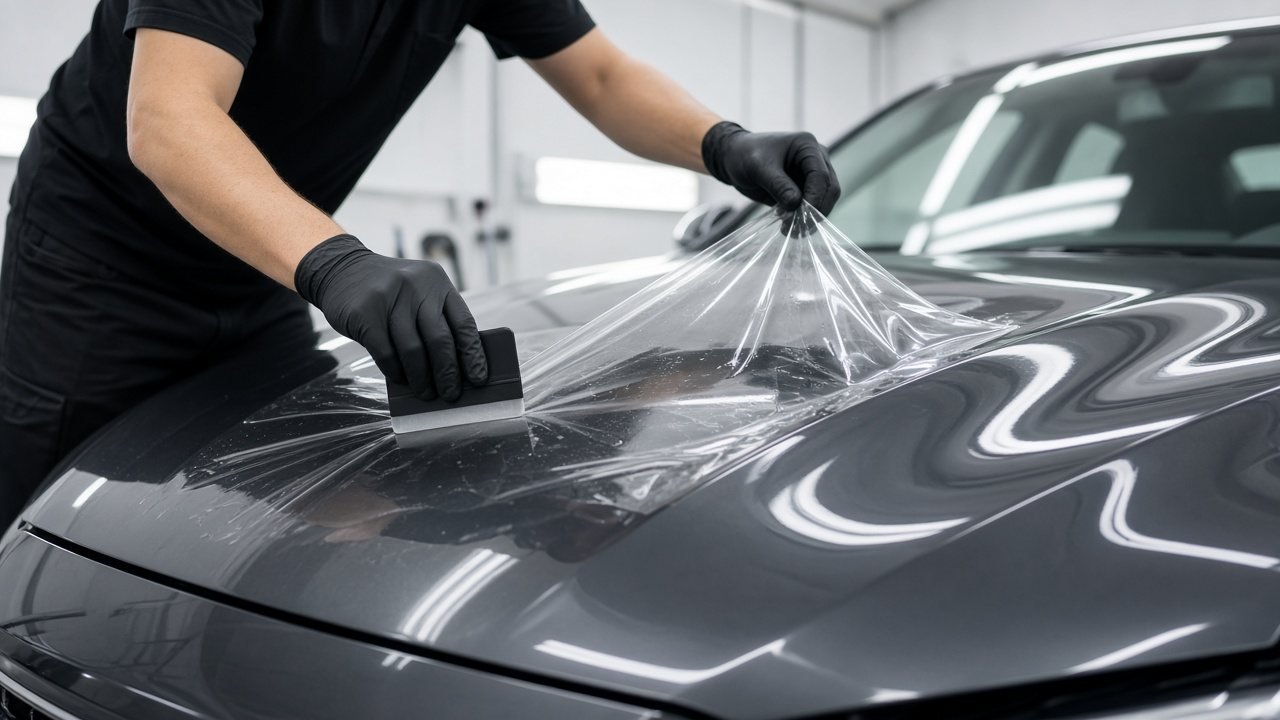
You fit film on customers' cars. Your product is the finished job: preparation, cutting, installation and aftercare advice.
Dealer
You install a brand's film for your own customers and represent that brand locally, with its warranty and registration behind your work.
Distributor
You supply film wholesale to installers in a city, state or region. Your product is stock, training and support for other shops.
Most people start as installers or dealers. Distribution needs capital for stock, a network of shops that can install well, and a clear agreement with the brand. If that is your plan, read our PPF distributor checklist first.
Build the Skills Before the Business
The film is only as good as the hands that fit it. Customers judge you on edges, corners and seams, not on the brand name on the box.
What a new installer has to learn
- Paint inspection and preparation. Washing, decontamination and, where needed, paint correction before any film goes on.
- Working with pre-cut patterns and bulk film. Pre-cut kits reduce knife work on the paint. Bulk installs need careful trimming and more experience.
- Slip and tack solutions, squeegee technique and stretching. Too much stretch on a curve causes lifting and visible stretch marks later.
- Edges, wraps and relief cuts. Where to wrap an edge, where to stop, and how to avoid a seam in the line of sight.
- Removal and rework. How to take film off safely when a job goes wrong.
Train on scrap panels first, then on your own car or a friend's, before you charge anyone. Ask any film brand you consider what training it offers in your region. Our guide to what professional PPF installation involves shows the standard a customer should expect.
Set Up a Clean, Controlled Bay
Dust is the enemy of paint protection film. A PPF bay does not need to be large, but it does need to be clean, enclosed and well lit.
- An enclosed bay that keeps out wind, dust and insects, with floors you can wash down
- Bright, even lighting so you can see contamination, bubbles and edges
- Stable temperature, because film behaves differently in heat and cold. For example, our catalogue lists wet application at 15–25°C for U115.
- Clean water, spray bottles, squeegees, heat gun, cutting tools and lint-free cloths
- A cutting table and, if you plan to use pre-cut patterns, a plotter and pattern software
- Space to keep the car for curing and a final inspection before handover
Many installation faults blamed on the film are actually process faults: dust, contamination or overstretching. Our guide to PPF defects, film vs installation explains how to tell them apart.
Choose a Film Brand You Can Stand Behind
When you fit a brand's film, its warranty becomes part of your promise to the customer. Choose a brand whose paperwork you can explain with confidence.
Questions to ask any PPF brand
- Is there a written warranty for each film, and what does it cover and exclude?
- Can every installation be registered online, so the owner has a record?
- Are the specs for each film published, with consistent product names?
- What training, marketing and technical support is offered in your region?
- Who handles warranty claims, and what photos and documents are needed?
- How are dealer terms, order quantities and territories set?
A range with clear grades also makes selling easier, because you can match a film to each customer's budget and expectations. As an example, our technical catalogue lists these clear films:
- Clear Protect - U115: 185 µm, up to 5-year limited warranty, subject to official terms.
- Clear Atmark - T118: 195 µm, up to 7-year limited warranty, subject to official terms.
- Crystal Clear Pro - R119: 195 µm, up to 8-year limited warranty, subject to official terms.
- Clear High Impact - A210: 220 µm, up to 10-year limited warranty, subject to official terms.
- Clear Hidefence - N220: 220 µm, lifetime limited warranty, subject to official terms.
Installations are registered on our E-Warranty page. Whichever brand you choose, be wary of unbranded rolls with no registration route. Our guide to fake vs original paint protection film explains what to check.
Costs to Plan For Before You Open
Set-up costs vary a lot by city and by how ambitious your first bay is, so we will not quote figures. Instead, list every cost before you commit, and get local quotes for each.
- Space: rent or fit-out of an enclosed, clean bay, plus lighting and power.
- Tools and equipment: hand tools, heat gun, cutting table and, if you choose, a plotter and pattern software subscription.
- Training: courses, practice film and the time you spend learning before you earn.
- Opening stock: film for your first jobs. Do not buy more than you can install well.
- Insurance and compliance: cover for customers' cars in your care, business registration, and taxes such as GST or VAT, depending on your market.
- Marketing: a simple website, a business listing and photos of finished work.
Your film cost is one line in that list, but it is the one that repeats on every job. Our guide to PPF roll price shows how to compare roll quotes on cost per usable area and landed cost.
Pricing Your Work and Winning First Customers
Customers rarely compare PPF jobs like for like. Your job is to make the comparison easy and honest.
Quote on what changes the job
An installed price depends on the film, its thickness and warranty, the size and shape of the car, the coverage and the time preparation takes. Show customers those factors instead of a single headline figure. Our guide to what affects PPF cost is a useful reference to share.
Offer clear coverage options
Most shops offer a few standard packages, such as high-impact areas, full front and full body. Explain the trade-offs plainly; our guide to full front vs full body PPF helps.
Build trust from the first job
- Photograph every car before and after, with the owner's permission.
- Register every installation so the owner has a warranty record.
- Hand over written aftercare advice for the first weeks.
- Ask happy customers for reviews, and answer every review politely.
Is a PPF Dealership Worth It?
A dealership can make sense, but it is not right for every shop. Weigh it honestly.
Why it can work
You get a named range with written warranties, online registration and product information to show customers, plus whatever training and support the brand offers in your region.
What it asks of you
Consistent installation quality, honest selling and proper registration of every job. Terms such as order quantities and territory depend on the brand and market.
When to wait
If you cannot yet install to a standard you would be proud to sign, spend more time training first. A brand cannot fix workmanship.
The best time to become a dealer is when your bay is ready, your skills are consistent and you have steady enquiries for protection work.
Starting with Ultra Nano Shield
Ultra Nano Shield works with dealers who install our film for their own customers and with distributors and wholesalers who supply installers in their territory. We welcome enquiries from businesses around the world, including detailing studios, wrap, tint and accessory shops, car dealerships with an in-house detailing team, and distributors.
- Send your application through our contact page, with your business name, city and country, the type of business and the PPF work you do today.
- We review your details, including your location, set-up and the market you serve.
- We discuss terms. If it is a good fit, we share dealer information: the films, supply options and commercial terms for your region.
- Get set up and register your first installation through our E-Warranty page.
Dealer terms, order quantities and territory arrangements are not published; they depend on your market, business type and volume. Start on our become a dealer page, and compare the full range on the paint protection film hub.
Summary
Starting a PPF business means choosing a model (installer, dealer or distributor), learning the craft properly, setting up a clean and controlled bay, choosing a film brand with written warranties and registration, planning every cost before you buy stock, and selling on coverage and quality rather than a headline figure.
Conclusion
A PPF business is built one clean edge at a time. The shops that last are the ones that train before they sell, keep their bay spotless, register every job and explain their quotes honestly.
Start small, build a portfolio you are proud of, and choose a film brand whose warranty you can stand behind. If you would like to talk about stocking Ultra Nano Shield films, request dealer information through our contact page and tell us about your business.
Explore Ultra Nano Shield Solutions
Talk to us about the right Ultra Nano Shield film for your vehicle, or find an authorised installer near you.