
Introduction
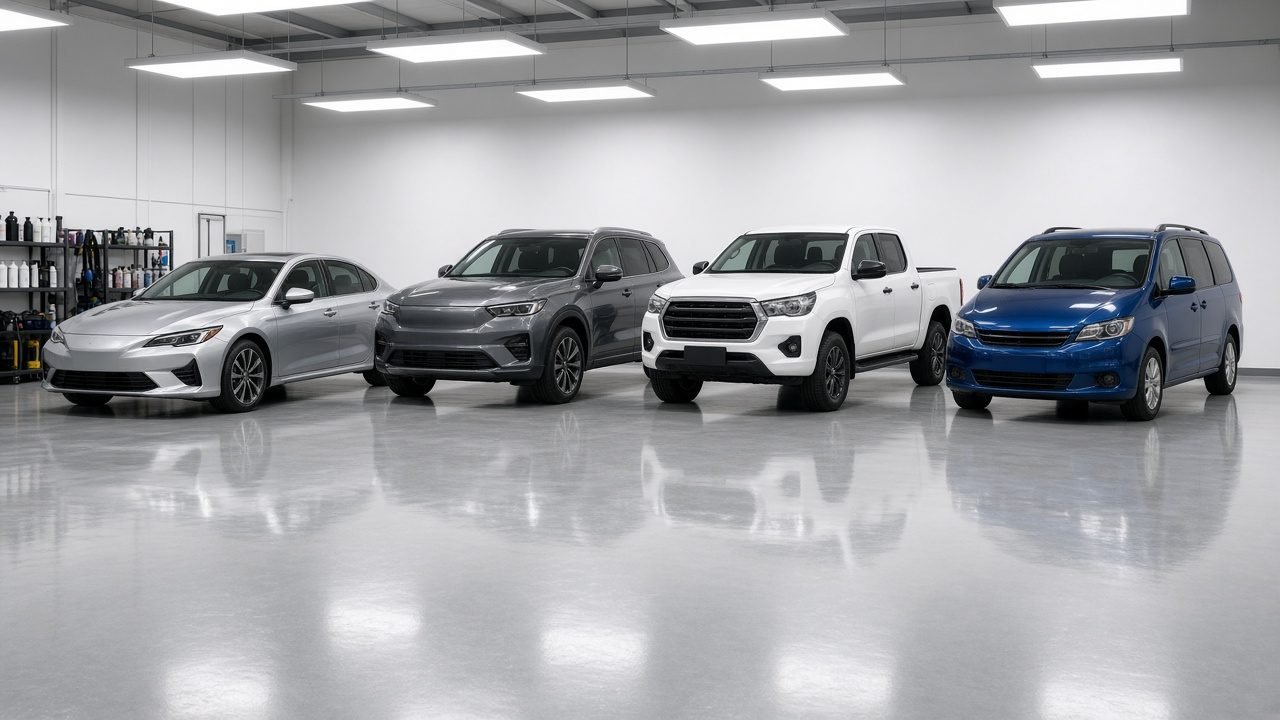
Paint protection film works the same way on every car: a clear, flexible layer of thermoplastic polyurethane (TPU) takes the hits so your paint does not. But where those hits land depends a lot on the shape of the vehicle. A low sports coupe, a tall SUV and a long pickup truck get chipped and scratched in very different places.
That is why "which PPF package should I get?" has no single answer. This guide walks through the most common body types, the panels that take the most damage on each, and the coverage that usually makes sense. Use it as a starting point for a conversation with your installer.
First, the Coverage Options
Most installers offer a version of these packages, although names vary:
- Partial front: the front part of the hood, the front of the fenders, the front bumper and the mirrors.
- Full front: the full hood, full front fenders, front bumper, headlights and mirrors. Often called a "full front end".
- Track pack or high-impact add-ons: full front plus rocker panels, A-pillars, the leading edge of the roof and the area behind the rear wheels.
- Full body: every painted panel on the car.
- Spot protection: door edges, door cups (behind the handles), the rear bumper loading area and other high-touch zones.
If you are deciding between the two most popular options, our guide to full front vs full body PPF explains the trade-offs in detail.
What Changes From One Vehicle Type to Another
Three things decide where a vehicle takes damage:
- Height and angle of the front end. A tall, upright front (SUVs, trucks, vans) catches more debris on the bumper and lower hood. A low, sloping nose catches more on the leading edge of the hood and the bumper lip.
- Wheel position and width. Wide tyres throw stones at the lower doors, rocker panels and the area just behind the wheels.
- How the vehicle is used. Family loading, cargo, towing, parking in tight spots and gravel roads all create their own wear patterns.
Sedans
Sedans have a long, fairly flat hood and a low front bumper, so the front end takes most of the stone chips at highway speeds.
Panels most exposed:
- Front bumper and lower grille area
- Leading edge of the hood
- Side mirrors
- Headlights
- Rocker panels just behind the front wheels
Coverage that usually makes sense: a full front is the most common choice for sedans that see regular highway driving. Add door edges and door cups if the car is parked in busy lots. For a daily commuter that mainly drives in the city, a partial front can be enough.
SUVs and Crossovers
SUVs and crossovers sit higher and have a more upright front. That changes the damage pattern: the bumper and lower hood take more direct hits, and the larger, flatter rear loading area gets scratched by bags, strollers and pets.
Panels most exposed:
- Front bumper, which is large and very upright on most SUVs
- Full hood rather than just the leading edge
- Lower doors and rocker panels, especially with wider tyres
- Rear bumper top surface (the loading lip)
- Door cups and door edges, which get heavy daily use on family vehicles
Coverage that usually makes sense: full front plus rocker panels and the rear bumper loading area. For larger SUVs that see gravel or unpaved roads, many owners go for full body, because the lower half of every panel is in the spray zone.
Electric SUVs and crossovers have a few extra things to think about, such as front sensors and large flat lower panels. See our guide to PPF on electric vehicles.
Pickup Trucks
Pickups are tall, wide and often driven on rough roads or used for work. Their damage pattern is different from passenger cars in two ways: the large front end acts like a wall for road debris, and the bed and rear sides take wear from cargo.
Panels most exposed:
- Front bumper and grille surround
- Full hood
- Front fenders and the area behind the front wheels
- Lower doors and rocker panels, which take spray from the rear tyres too
- Bed rails and the top of the tailgate, where cargo is loaded
- Rear fenders behind the wheels
Coverage that usually makes sense: full front, rocker panels and the area behind the rear wheels as a minimum. Bed rails and tailgate top are worth adding if you carry cargo often. For trucks used on gravel or construction sites, full body coverage is a common choice.
Minivans and Vans
Minivans are built around people and cargo. The front end takes the usual highway chips, but the bigger story is the sides and rear: sliding doors, the rear bumper and the lower panels all see constant use.
Panels most exposed:
- Front bumper and hood
- Sliding door tracks and the panels around them
- Lower side panels, where children's shoes and bags make contact
- Rear bumper loading area
- Door cups and door edges
Coverage that usually makes sense: a full front plus the rear bumper top, door cups and the lower side panels around the sliding doors. Families who keep their van for many years often find this "high-touch" coverage pays off as much as the front-end protection.
Hatchbacks
Hatchbacks are compact, with a short hood and a rear that is loaded often. Their short front means the hood leading edge, bumper and mirrors take most of the chips.
Panels most exposed:
- Front bumper
- Hood (often small enough that full hood coverage is practical)
- Side mirrors
- Rear bumper loading lip
- Rear quarter panels behind the wheels on wider performance models
Coverage that usually makes sense: full front is often practical on a hatchback because the panels are small. Add the rear bumper loading area if you use the boot daily.
Coupes and Sports Cars
Low, wide and fast, sports cars and coupes take the most aggressive stone chip damage. A low nose sits right in the path of debris from vehicles ahead, and wide rear tyres throw grit at the rear quarters.
Panels most exposed:
- Front bumper and splitter area
- Full hood and front fenders
- Headlights
- A-pillars and the leading edge of the roof
- Rocker panels
- Rear quarter panels behind the rear wheels
Coverage that usually makes sense: full front as a minimum, with rocker panels, A-pillars and rear quarters added. Many owners of performance cars choose full body coverage, especially if the car is driven on track days or open roads.
Choosing the Right Film for Your Vehicle
Once you know which panels to cover, the next decision is the film. The Ultra Nano Shield range covers clear gloss, matte and colour finishes. A few examples from our product catalogue:
- Clear High Impact - A210 is a premium clear TPU at 220 µm, the thickest listed thickness in the range alongside Life Time - N220. Thicker film is often chosen for high-impact zones on trucks, SUVs and sports cars.
- PCU-X10 is a premium clear TPU film made for white cars, listed at 200 µm with a high-gloss surface.
- Pro Matte Platinum is a matte transparent TPU at 195 µm, for owners who want a satin look on any body type.
- Super Glossy Black is a glossy black colour PPF at 195 µm, popular for roofs, mirrors and trim accents.
For a side-by-side view of every film, see the Ultra Nano Shield PPF range. Our guide to PPF thickness in mils and microns explains what those numbers mean in practice.
Tips That Apply to Every Vehicle Type
- Prep comes first. Film locks in whatever is on the paint. Read why paint correction before PPF matters.
- Ask about wrapped edges. Wrapping film around panel edges, where possible, makes the edge less visible and less likely to lift.
- Think about how long you will keep the vehicle. If you plan to keep it for many years, wider coverage usually makes more sense.
- Use a trained installer. Larger and more complex body shapes need more skill. See what professional PPF installation involves.
Summary
The right PPF package depends on the vehicle shape and how it is used. Full front suits most sedans and hatchbacks, SUVs and pickups benefit from rocker panels and loading areas, minivans from high-touch side and rear coverage, and performance cars often go full body.
Conclusion
Every vehicle type has its own weak spots, and the right package is the one that matches how you drive. Explore the Ultra Nano Shield PPF range, compare films in the technical catalogue, and ask an authorised Ultra Nano Shield installer which coverage suits your car.
Explore Ultra Nano Shield Solutions
Talk to us about the right Ultra Nano Shield film for your vehicle, or find an authorised installer near you.